
This is the fourth post in a series on motivation and engagement in the workplace.*
Your best engineer aces every assessment you've ever run on them: stable, clear working style, strong team fit. The latest profile says everything's right. Six weeks later, they hand in their notice. The profile never saw it coming. It couldn't have because it wasn’t built to.
This isn't a knock on personality assessments. DiSC, CliftonStrengths, Kolbe, and the rest are genuinely useful for answering one question extremely well. But there’s an entirely different question they don’t answer — and that question is the one that predicts how engaged people are with their work and whether they are preparing to leave.
Two different questions
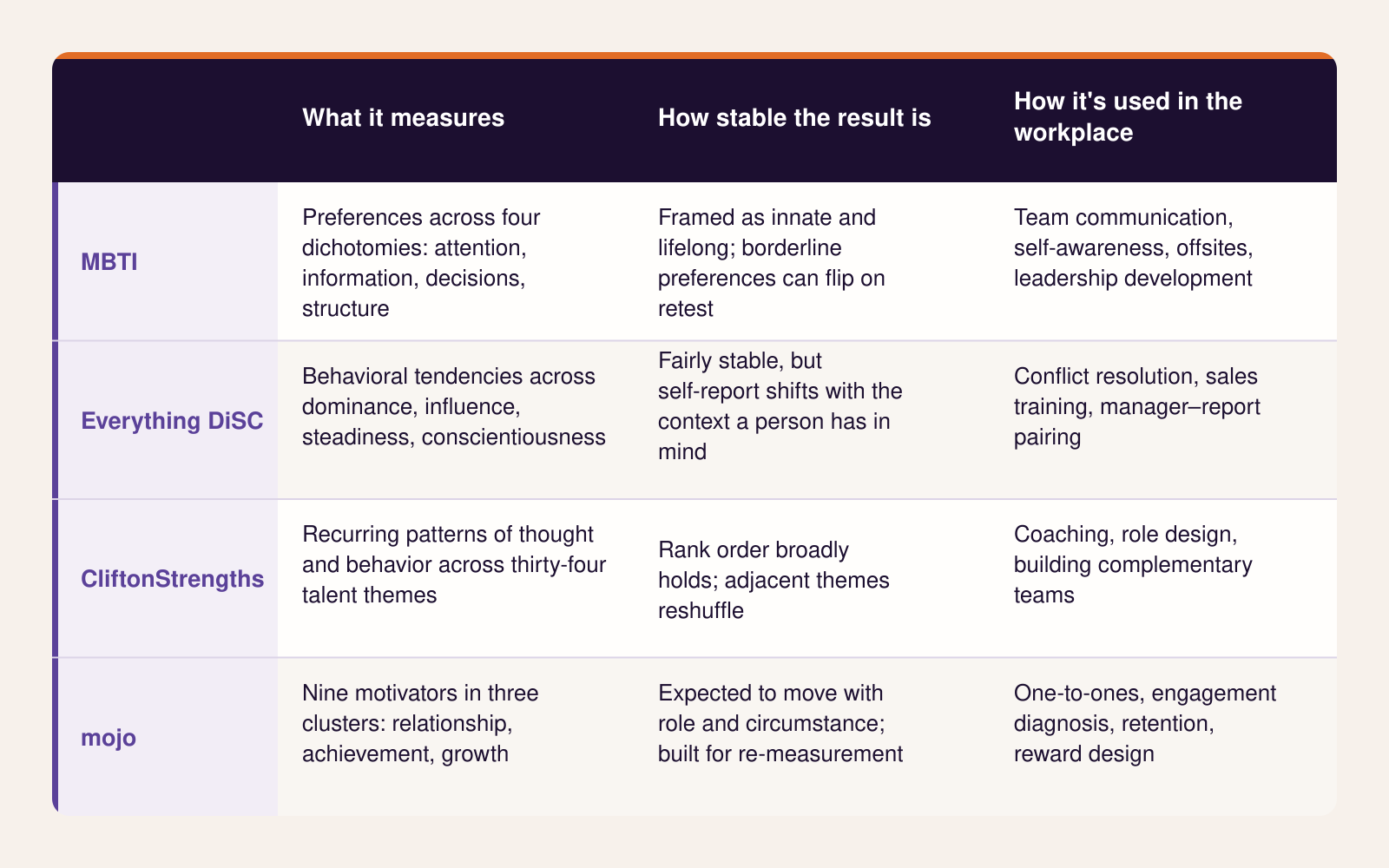
A personality assessment answers “Who is this person?” It maps stable characteristics. DiSC describes behavioral tendencies. CliftonStrengths reveals top talents. Kolbe measures instinctive modes of action. MBTI (Myers-Briggs), the most famous of them, sorts preferences into personality “types.” Different instruments that all show a durable picture of personality and behavior, and that assessment holds steady for years.
Mojo™ answers a different question: what does this person need from their work right now? It maps their motivational drivers, how well their current role is meeting those drivers, and whether the satisfaction of their drivers is improving or eroding. And unlike a personality trait, the answer to mojo’s question changes over time and when circumstances change, such as the arrival of a new manager or a shift in life outside work.
Below the waterline — personality and motivation
In this series, we’ve used the “engagement iceberg” to better understand motivation, how it is measured, and how it compares to other employee development tools. Surveys and reward programs work at the waterline of the iceberg. They’re mostly visible and don’t do much to change engagement. The real drivers sit below.
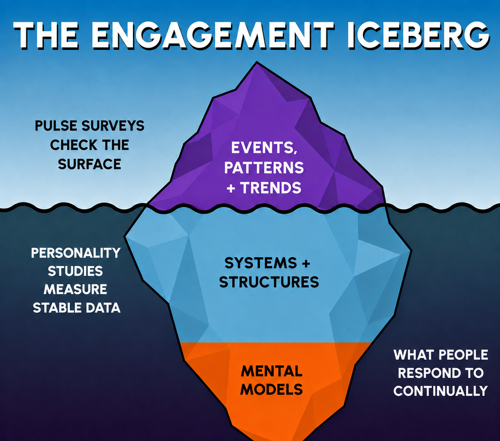
Since personality assessments measure data that does not change over time, it is tempting to assume they are measuring the most core components of someone. And it is almost paradoxical to understand that motivation can actually be that core component of engagement while also being a response to the present and something that changes over time. Engagement, unlike personality, is a continual process. And in order to effectively drive engagement, you have to get at an individual's core motivators, below personality and skill.
Curious what disengagement is already costing you? Try our free ROI calculator to put a number on turnover, lost productivity, and manager effectiveness.
Different tools tell you different things about your people
No employee support tool is necessarily better than any other. As long as the tool is well understood and implemented with intention, it can be genuinely useful.
The difference is in the purpose it was built for. Programs that assess fixed traits of an individual — how they communicate, cooperate, and take action — provide genuinely good information for optimizing the effort of motivated employees. But if those employees are unmotivated, if what lies beneath those fixed traits are unfulfilled motivational drivers, then no personality assessment is going to increase their level of engagement.
Moreover, fixed results don’t require reassessment, so they often become “part of the furniture” in the workplace — something that does not move or change and eventually gets ignored. Motivation is dynamic; it degrades if not continually fed. It needs to be monitored. Mojo provides data that is relevant week to week, quarter to quarter, ensuring those skills and traits measured by personality assessments are put to optimal use.
Keep the profile. Add value.
If your organization has invested in a personality assessment, that investment still pays. Knowing how your people are built adds real value that doesn't expire.
Mojo adds something these assessments don’t naturally come with — a plan for continuous engagement. Using mojo to monitor motivation and set action plans gives employees and managers a way to leverage the data from personality profiles in a complementary way. Knowing not just how someone works but what’s motivating them to work in the current moment is the ultimate blueprint for employee satisfaction, productivity, and retention.
See what your personality test can't show you. Book a demo and read the layer that predicts who stays.
*Other posts in the series:
Why Your Best Employees Quit Before Your Survey Sees It Coming
Why Your Engagement Survey Can't Tell You What's Wrong
Why Recognition Programs Don't Build Culture
The 9 Things That Drive Your Employees
People Join Companies. They Quit Teams.